Once you’ve made a budget, and are working to live below your means, you need a way to track your spending.
I used to use Quicken to track my spending, but there hasn’t been a good Mac version for quite a while so I started using Mint (since acquired by Intuit, the makers of Quicken) to track my spending. Mint works well for me because once you add your financial institutions everything gets updated automatically. Mint handles the track your spending part of the puzzle for me and for the budget part I now use YNAB (You Need a Budget). Before making this change I used my own spreadsheets and that’s still a perfectly good option to do this on the cheap (even though I used Microsoft Excel for the spreadsheets, Google Docs is a free option):
- simple budget spreadsheet
- more complicated version that includes fields for tracking your spending weekly
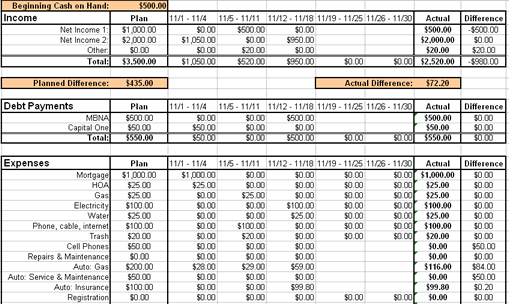
What’s important of course is not which tool you use, but finding a tool that works best for you and feels comfortable so that you’ll want to (be willing to) use it regularly.
In addition to using a tool to track your spending, have a regular ‘budget meeting’ with your spouse, your kids, or anyone who helps you to stay accountable. Make sure that you are scheduling a time to discuss where you are at with your spending, how the month is shaping up with your money and any areas of concern. Communication is critical, and frequent updates help you to stay on top of things. If you keep up with this you shouldn’t have any ‘surprises’ or mistakes that lead to bank fees or bounced checks or anything else. This is not a time to place blame on anyone if mistakes have been made, but rather a time to discuss what went wrong and what went right in a comfortable way. You need to be a team!
Tracking every dollar spent and assigning it to a category may not work for everyone. It works for me because I’m the computer nerd in the house and I like to collect and analyze the data. If you aren’t wired this way, consider much more broad budget categories that you fund at the start of the month or with each paycheck. Maybe you put $100 in your pocket (or an envelope) for food and that covers your groceries and eating out for the week. You don’t have to track all of those dollars, but you do have to commit to the fact that this is food money and you aren’t going to mix in dollars from other categories and spend it on unrelated things.
You may think the budget process I covered is too tedious, but I would recommend trying to track every dollar for a month or two and see how it goes. At the very least, you’ll have a better understanding of where your money is going. If that’s not for you, just be honest with yourself about where you are assigning your money and don’t stray too far from your plans.
9 Steps to Get Out of Debt:
- # 1 Stop Borrowing Money
- # 2 (a) Why You Should Make a Budget
- # 2 (b) How to Make a Budget
- # 3 Turn Your Junk Into Cash
- # 4 Create an Emergency Fund
- # 5 Live Below Your Means
- # 6 Track Your Spending and Update Your Budget
- # 7 Visual Reminders to Track Your Debt
- # 8 Make Yourself Accountable
- # 9 Be Patient and Don’t Give Up
Comments are closed.